
Blog · 8 min read · Updated September 2026
Who to Call for a Water Stain on the Ceiling (and What to Do First)
A brown ring overhead is your house telling you water has been somewhere it shouldn't. The trick is figuring out whether it's still wet, where it came from, and which trade actually fixes it — before the drywall gives out or mold takes hold.
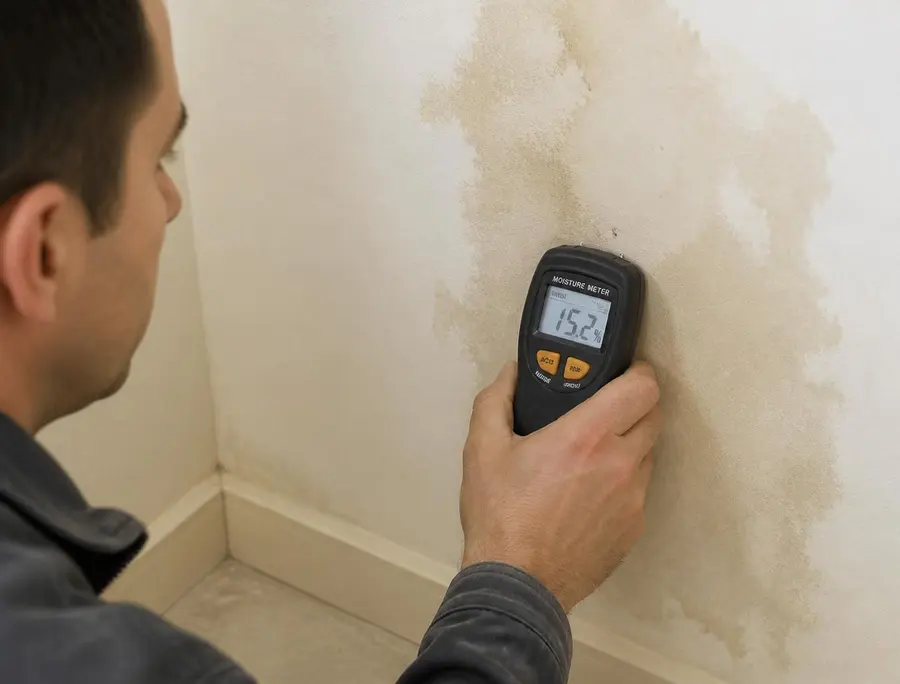
Most people notice it the same way: you're on the couch, you glance up, and there's a coffee-colored ring that definitely wasn't there last month. Nothing is dripping. Nothing smells terrible. So the natural question is whether this is a "call someone right now" problem or a "deal with it this weekend" problem.
Short answer: a ceiling stain is a symptom, never the whole story. The stain is where water exited. The leak is usually somewhere else entirely — often a few feet away, following a joist or a pipe run before it finds a seam in the drywall.
First: figure out if it's still wet
Put on a glove and press the middle of the stain very gently.
- Soft, spongy, cool, or it dents — active or very recent moisture. Do not keep pressing; wet drywall tears.
- Firm and chalky with a sharp brown outline — likely an old, dried event. Still worth verifying, because "dry surface" and "dry cavity" are not the same thing.
- Sagging, bulging, or bubbled paint — water is pooling above the drywall. Stay out from under it, move furniture, put a bucket down, and get help today.
If the stain touches a light fixture, ceiling fan box, or smoke detector, shut that circuit off at the breaker. Water and junction boxes are a bad combination and it is genuinely the most dangerous part of an otherwise boring problem.
Who to call, based on where the water came from
Call a plumber when…
The stain is under a bathroom, kitchen, laundry room, or a second-floor fixture; it gets worse after someone showers or runs a load; or you can hear a hiss or trickle in the wall. Supply-line pinholes, failed shower pan liners, corroded drain collars, and loose toilet flanges are the usual suspects. A plumber stops the water. They generally don't dry your structure or replace the ceiling.
Call a roofer when…
The stain appears only after rain or snowmelt, sits on a top-floor ceiling, or shows up near a chimney, skylight, valley, or plumbing vent boot. Ice dams and cracked pipe boots cause a huge share of "mystery" ceiling stains in cold climates.
Call an HVAC tech when…
There's an air handler or attic unit above the stain, or the drip is seasonal and matches heavy air-conditioning use. Clogged condensate drain lines and rusted-through drain pans are extremely common — and cheap to fix once identified.
Call a water damage restoration provider when…
- The ceiling is soft, sagging, or reads wet on a meter.
- Insulation above the ceiling got soaked (wet insulation stops drying on its own).
- Water traveled — down a wall, into a light box, onto flooring.
- There's a musty smell, or the event happened more than a day ago.
- You plan to file an insurance claim and need documented moisture readings.
This is the trade with the equipment that actually matters here: thermal imaging and pin meters to map the wet area, air movers and commercial dehumidifiers to pull moisture out of framing, and controlled demolition when a material can't be saved. Many providers also coordinate the plumbing or roofing repair so you're not project-managing three phone numbers with a bucket in your hallway.
What to do in the first hour
- Move furniture, electronics and rugs out from underneath.
- Put down a bucket or tote, and lay towels in a ring around it — splash spreads further than people expect.
- Kill power to fixtures on or near the stain.
- Shut off the fixture, or the whole house supply, if you suspect plumbing.
- Photograph and video everything — wide shots and close-ups, before you touch anything. This is your claim.
- Do not punch a "relief hole" unless you're ready for what comes out, and never while standing directly beneath a bulging section.
Why painting over it backfires
Stain-blocking primer is a legitimate final step. It's a terrible first step. If the cavity is still holding moisture, the primer seals damp paper facing against wet insulation, and mold has everything it needs — food, moisture, darkness, no airflow. Colonization can start in roughly 24 to 48 hours in warm, humid conditions. Six weeks later the stain bleeds back through and now you're paying for remediation instead of a $40 can of primer.
If you're already smelling something earthy or seeing dark speckling, read our guide on black mold on walls and who handles testing versus removal.
What it typically costs
A small, single-room ceiling event that's caught early is usually the cheapest scenario in all of water restoration — often a few days of drying plus a drywall patch and paint. A leak that ran for weeks through insulation into a wall cavity is a different budget entirely. We break the variables down in how much water damage restoration costs, including how insurance usually treats each cause.
The one thing people regret
Waiting. Not because a stain is dramatic, but because drying is time-sensitive and insurance adjusters look closely at how fast you acted to limit the damage. A stain you documented and had checked on day one is a small repair. The same stain in October, ignored since July, is a remediation project.
If you'd rather just talk it through with a provider in your area, call (866) 227-7792. Services are performed by independent contractors/providers, and availability varies by location.
Questions homeowners ask most
- Who do I call for a water stain on the ceiling?
- Call a water damage restoration provider if the ceiling is soft, sagging or still damp — they locate hidden moisture and dry the structure. If the drip clearly comes from a pipe or a bathroom above, a plumber stops the source first. If the stain sits under a roof plane or near a chimney and shows up after rain, start with a roofer. One call to (866) 227-7792 connects you with an independent local provider who can help you sort out which trade you need.
- Is a water stain on the ceiling an emergency?
- It becomes urgent when the drywall is sagging or bulging, when water is dripping near light fixtures or outlets, or when the stain grows while you watch it. Those cases need same-day attention because the ceiling can fail and the water is likely touching wiring. A dry, old, hard stain that never changes is not an emergency, but it still deserves a moisture check.
- How can I tell if a ceiling water stain is old or new?
- Press gently with a gloved finger: fresh damage feels soft, spongy or cool and may leave a dent. Old damage is firm and chalky with a crisp, well-defined brown outline. New leaks often have a dark, blurry edge and a musty smell. A moisture meter or infrared camera is the only reliable way to confirm what is still wet inside the cavity.
- Does homeowners insurance cover a ceiling water stain?
- Policies typically cover sudden, accidental discharge — a burst supply line, an overflowed tub, a failed water heater. Long-term seepage, deferred maintenance, and most flood or groundwater causes are usually excluded. Photograph everything before cleanup and report the loss promptly; adjusters weigh how quickly you acted to prevent further damage.
- How long until mold grows on a wet ceiling?
- Mold can begin colonizing damp drywall, paper facing and insulation within roughly 24 to 48 hours in warm, humid conditions. That is why drying the cavity — not just painting over the stain — is the part that actually prevents a second, more expensive problem.
- Can I just paint over a ceiling water stain?
- Only after the source is fixed and the cavity is verified dry. Stain-blocking primer hides discoloration, but paint over a wet cavity traps moisture, feeds mold behind the surface, and the stain bleeds back through within weeks.
Keep reading
- How Much Does Water Damage Restoration Cost in 2026?Water categories, drying days, and what insurance usually pays for.
- Black Mold on Walls: Who to Call, and What Not to DoSurface mildew vs. a moisture problem inside the wall — and why bleach fails.
- All homeowner guidesEvery article on water damage, drying, mold and restoration costs.
Not sure who to call first?
One quick call connects you with an independent local provider who handles water damage and mold-related work in your area.