
Blog · 9 min read · Updated September 2026
Black Mold on Walls: Who to Call, and What Not to Do
You moved a dresser and found dark speckling across the drywall. Before you reach for the bleach — which is the most common and most counterproductive first move — here's how to read what you're looking at and who actually fixes it.
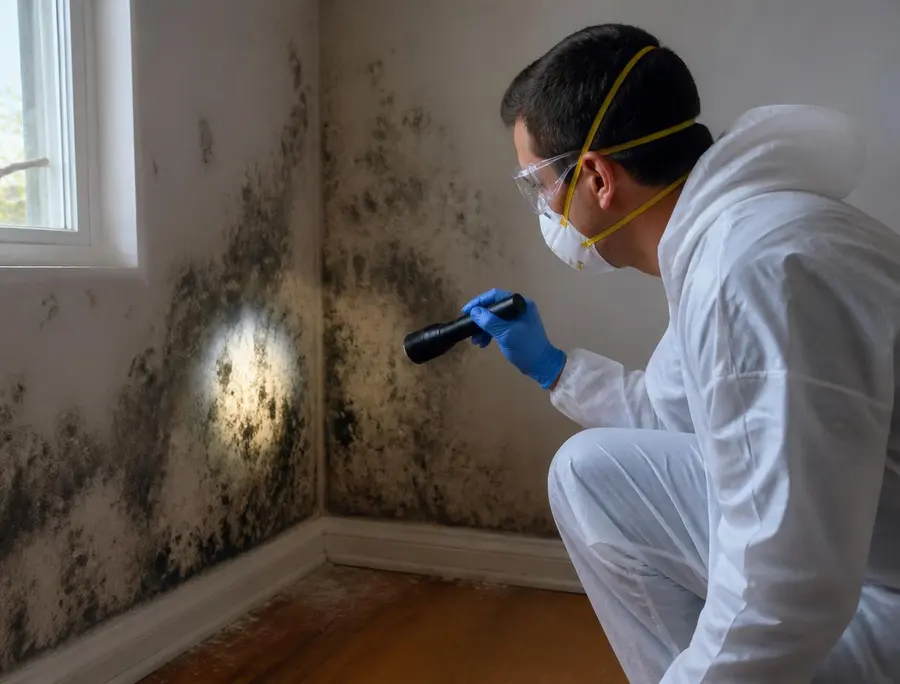
Mold is not a cleaning problem. It's a moisture problem that happens to be visible. Every decision that follows gets easier once you accept that, because it reframes the question from "how do I scrub this off?" to "where is the water coming from?"
Step one: is this surface mildew or something inside the wall?
Signs it's probably surface-level and humidity-driven:
- Bathroom, closet, or exterior-facing wall with poor airflow.
- It wipes off and the drywall underneath is firm and dry.
- It's worst in humid months and behind furniture pushed flat against a wall.
Signs there's moisture behind the drywall:
- It returns within days of cleaning, in the same spot.
- Paint is bubbling, the wall feels soft, or nail heads are rusting through.
- The pattern follows something structural — a stud bay, a pipe chase, a straight line along the baseboard.
- Persistent musty smell that gets stronger near an outlet, vent, or floor edge.
- There was a leak, an overflow, or a stain in that area at some point.
Only a moisture meter or thermal camera settles it. Cutting an exploratory hole yourself can release spores into the rest of the house, so it's worth having someone with containment do it.
Who to call, and what each one actually does
Mold remediation provider
The right first call for visible growth on drywall. They build containment, set negative air pressure with HEPA filtration, remove affected porous material, HEPA-vacuum and treat what remains, and — critically — identify the moisture source so it doesn't come back.
Independent mold inspector / industrial hygienist
Tests and writes a remediation protocol but does not do the removal, which removes the conflict of interest. Worth it when occupants have unexplained symptoms, when you suspect hidden growth, in landlord–tenant or real estate disputes, or when you want post-work clearance testing.
Water damage restoration provider
The right call when the mold clearly followed a water event — a burst pipe, an appliance overflow, a roof leak. They dry the structure and typically handle remediation in the same scope. See how restoration pricing works if a claim is involved.
Plumber, roofer, or HVAC tech
Whoever owns the water source. Remediation without fixing the source is a temporary, expensive cosmetic result. If the trail starts overhead, our ceiling water stain guide walks through how to identify which trade to call.
Four things not to do
- Don't bleach it. Bleach is mostly water. It bleaches the visible surface while the root structure inside porous drywall survives — and you just added moisture.
- Don't dry-scrub or sand it. That aerosolizes spores and spreads a localized problem through the whole house via the HVAC system.
- Don't point a box fan at it. Same problem: you're distributing spores.
- Don't paint over it. Even "mold-blocking" paint over an active colony on a damp substrate buys you a few weeks at most.
Is it actually "black mold"?
Color doesn't identify species — plenty of harmless-to-common molds are dark, and the species people worry about isn't always dark. Practically, this matters less than people expect: the response to significant indoor growth is the same regardless of species. Contain it, remove it, fix the water. If someone in the home has asthma, allergies, is immunocompromised, elderly, or an infant, treat symptoms as a real reason to prioritize.
Keeping it from coming back
- Hold indoor relative humidity around 30–50% — a $15 hygrometer tells you where you are.
- Run bathroom exhaust fans during showers and for 20 minutes after.
- Leave a few inches of air gap between furniture and exterior walls.
- Keep gutters and downspouts clear and directing water away from the foundation.
- Fix small drips the week you notice them, not the season you notice them.
- Insulate cold water lines that sweat inside walls and crawlspaces.
If you want a second opinion first
Perfectly reasonable. Independent testing before remediation gives you a written scope to compare bids against. But if the wall is visibly growing mold and you already know the leak that caused it, testing often just delays the work while the colony expands.
To talk with a provider serving your area, call (866) 227-7792. All contractors/providers are independent; licensing requirements and availability vary by location.
Questions homeowners ask most
- Who do I call for mold on walls in my house?
- For visible mold on drywall, call a mold remediation provider — they contain the area, remove affected porous material and correct the moisture source. If you want unbiased confirmation first, an independent indoor air quality inspector or industrial hygienist tests and writes a protocol without performing the removal. If the mold followed a leak, a water damage provider usually handles both the drying and the remediation. Call (866) 227-7792 to get connected with an independent local provider.
- How can I tell if it's just mildew or mold inside the wall?
- Surface mildew on paint or grout wipes off and does not return quickly once humidity drops. Suspect a problem inside the wall when the spot returns within days, when paint bubbles or the drywall feels soft, when the pattern follows a straight line such as a stud bay or pipe run, or when there is a persistent musty smell that is stronger near an outlet or baseboard. Only a moisture meter or thermal camera confirms what is behind the surface.
- Should I bleach mold off the wall?
- Bleach is mostly water and does not penetrate porous drywall, so it discolors the surface growth while the root structure survives underneath and the added moisture can feed regrowth. Scrubbing also aerosolizes spores into the rest of the home. Contained removal of the affected material plus fixing the moisture source is the approach professionals use.
- Is black mold dangerous?
- Many dark molds are common and not the toxigenic species people fear, and color alone cannot identify a species. That said, any significant indoor mold growth can trigger respiratory irritation, allergy symptoms and asthma flare-ups, and infants, elderly household members and immunocompromised people are more sensitive. Treat sizeable growth as a health and building issue and avoid disturbing it.
- Do I need a mold test before remediation?
- If mold is clearly visible and the moisture source is known, testing often adds cost without changing the plan. Testing is genuinely useful when occupants have unexplained symptoms, when you suspect hidden growth you cannot see, when a landlord or buyer dispute is involved, or when you want independent post-remediation verification that the work succeeded.
- Can mold come back after remediation?
- Yes, whenever the moisture source remains. Remediation removes the colony; it does not change the conditions that created it. Durable results come from repairing the leak, improving ventilation, and keeping indoor relative humidity roughly between 30 and 50 percent.
Keep reading
- Who to Call for a Water Stain on the CeilingRead the stain, find the source, and skip the wrong trade.
- How Much Does Water Damage Restoration Cost in 2026?Water categories, drying days, and what insurance usually pays for.
- All homeowner guidesEvery article on water damage, drying, mold and restoration costs.
Not sure who to call first?
One quick call connects you with an independent local provider who handles water damage and mold-related work in your area.