
Blog · 10 min read · Updated September 2026
Water in the Basement: Who to Call and What to Do First
You came downstairs and the floor is wet — maybe an inch, maybe just a dark ring along the wall. Here's the order to do things in, who handles which part, and the mistakes that turn a one-day cleanup into a three-week rebuild.
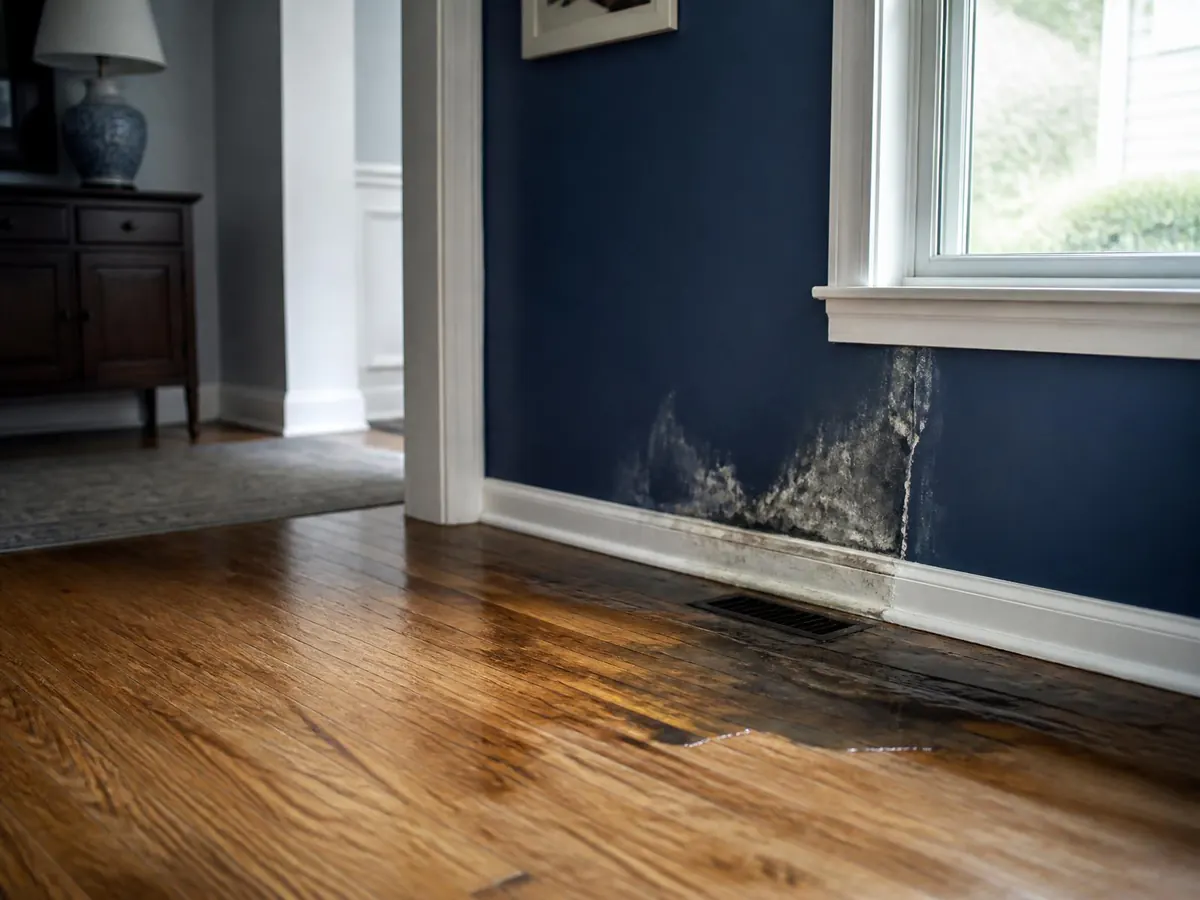
Basements collect water for boring, predictable reasons: they're the lowest point in the house, they hold the plumbing and the appliances most likely to fail, and they sit against soil that holds rainwater. The good news is that the source usually announces itself if you know what to look at.
First five minutes: safety, then the shutoff
- Power first. Don't step into standing water if outlets, the furnace, a washer/dryer or the electrical panel are near it. Kill the breaker to that area from a dry position, or call an electrician or the utility.
- Assume dirty water is dirty. If the water came from a floor drain or smells like sewage, stay out and let a provider handle it in protective gear.
- Shut off the water supply if the source is clearly plumbing — the main valve is usually near where the line enters the basement wall.
- Photograph everything before you move a single box. Wide shots, close shots, water line on the wall, damaged contents. Insurance decisions hinge on this.
- Lift what you can. Get boxes, electronics and furniture legs up off the wet floor so they stop wicking.
Find the source before you call anyone
It happened during or right after heavy rain
Look for water entering at the wall–floor joint, through foundation cracks, or under a basement window. That's groundwater, and the real fix is outside: gutters, downspout extensions, grading, window well drains. A restoration provider dries it; a foundation or drainage contractor keeps it from returning.
The sump pit is full and the pump is silent
Failed pump, failed float switch, tripped breaker, or a power outage with no battery backup. Plumber for the pump; restoration for the water it let in.
Water is clean and the floor is wet near an appliance
Water heater, washing machine hose, softener, or a supply line. Sudden appliance failures are the scenario insurance most often covers.
Water came up out of the floor drain
That's a sewer or main-line backup. Category 3 water — do not clean it yourself. Call a plumber for the line and a restoration provider for the cleanup and disinfection.
Everything is dry except one damp patch that keeps returning
Often condensation on cold lines or an ongoing slow leak. A moisture meter reading tells you which. If you're also seeing growth, our mold on walls guide covers what to do next.
What a restoration crew actually does down there
- Extraction with truck-mounted or portable units — far faster than any shop vac.
- Removal of carpet pad, saturated insulation and drywall (often a 12–24 inch "flood cut" above the water line) so cavities can dry.
- Air movers plus commercial dehumidifiers, sized to the room's cubic footage.
- Daily moisture readings on framing and slab until materials hit a dry standard.
- Antimicrobial treatment where contamination was involved.
- Documentation your insurer will ask for.
Typical drying runs three to five days. Costs track closely with the water category and the square footage affected — the restoration cost breakdown walks through the ranges.
Keeping the basement dry next time
- Clean gutters twice a year and extend downspouts at least six feet from the wall.
- Re-grade soil so it slopes away from the foundation.
- Test the sump pump quarterly by pouring a bucket into the pit.
- Add a battery or water-powered backup pump — most failures happen during outages.
- Replace rubber washing machine hoses with braided stainless every five years.
- Put cheap water alarms next to the heater, washer and sump pit.
- Keep basement humidity around 50% with a dehumidifier that drains to the pit.
To talk with a provider serving your area, call (866) 227-7792. All contractors/providers are independent; licensing requirements and availability vary by location.
Questions homeowners ask most
- Who do I call when there is water in my basement?
- For standing water or soaked carpet and drywall, call a water damage restoration provider — they extract the water, remove unsalvageable materials and dry the structure with commercial equipment. Call a plumber if the source is a failed sump pump, a burst supply line or a backed-up drain, and an electrician before you touch anything if water is near outlets, the panel or the furnace. One call to (866) 227-7792 connects you with an independent local provider.
- Is it safe to walk into a wet basement?
- Not until the power to that area is off. Water and electricity in the same room is the single most dangerous part of a wet basement. If the panel itself is in the water, or you would have to stand in water to reach it, stay out and call the utility or an electrician. Also stay out if the water may contain sewage.
- How long can water sit in a basement before mold grows?
- Mold can begin developing on damp porous materials in roughly 24 to 48 hours in normal indoor temperatures. That window is why extraction speed matters more than almost anything else. Materials that stay wet past a couple of days usually get removed rather than dried.
- Will a shop vac and fans dry my basement?
- For a small, clean-water spill on a sealed concrete floor, often yes. For soaked carpet pad, drywall, insulation or framing, household fans move air but do not remove enough moisture from the air for materials to release it. Professionals pair air movers with dehumidifiers and meter the materials daily until they hit a dry standard.
- Does homeowners insurance cover basement water?
- It depends entirely on the source. Sudden internal failures such as a burst pipe or a ruptured water heater are commonly covered. Groundwater seepage and sewer or drain backup are usually excluded unless you carry a specific endorsement. Document everything with photos before cleanup and read your policy's water section closely.
- Why does my basement get wet only when it rains?
- That pattern points to water management outside the house rather than plumbing: clogged gutters, downspouts that discharge next to the foundation, grading that slopes toward the house, window well drains that are blocked, or hydrostatic pressure pushing through cracks in the slab and walls. Fixing drainage outside is usually cheaper and more durable than sealing from inside.
Keep reading
- Burst Pipe? What to Do in the First HourShutoff, damage control, and who to call in what order.
- Does Homeowners Insurance Cover Water Damage?What's typically covered, what's excluded, and how to file well.
- All homeowner guidesEvery article on water damage, drying, mold and restoration costs.
Not sure who to call first?
One quick call connects you with an independent local provider who handles water damage and mold-related work in your area.